
New York’s pied-à-terre tax was signed into law on May 27, 2026, as part of the state’s 2026-2027 budget, championed by Governor Kathy Hochul and Mayor Zohran Mamdani as a way to close the city’s budget gap.
It took effect July 1, 2026, and targets non-primary residences owned by people whose main home is outside NYC. (Source: nyc.gov)
How Much is the Pied-À-Terre Tax Really?
The structure is aggressive. In its first phase (through mid-2028), one- to three-family homes assessed at $5 million or more face rates of roughly 0.8% to 1.3%. Condos and co-ops face steeper rates (about 4-6.5% of assessed value) because the city’s assessment system has historically undervalued those units relative to market price.
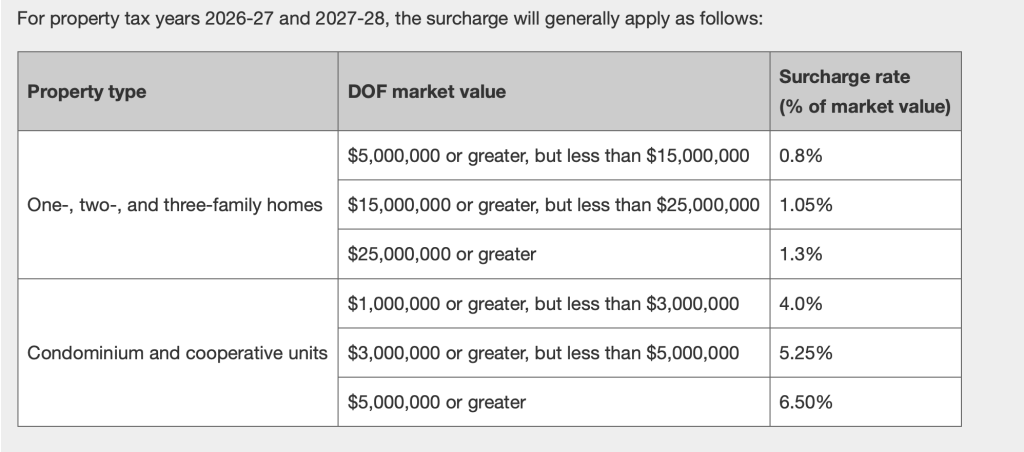
It’s expected to raise around $500 million a year (the city figures do not take into account the reduced earnings from lower transfer taxes due to its effect on the very high end market – with fewer sales and lower prices expected – but this is a story for another post) from an estimated 10,000 to 13,000 properties, and it sunsets in 2031 unless renewed.
What Has the Pied-à-Terre Tax Effect Been Thus Far?
The market reaction has been messy.
April: panic
When Governor Hochul first floated the tax on April 15, the real estate industry reported buyers pulling back within days. A $16.5 million penthouse deal in Madison Square Park Tower nearly fell apart the moment the proposal was announced when a prospective buyer realized they may owe nearly $100K per year in added pied-à-terre taxes.
May: a surprising rebound
By early May, high-end sales had actually accelerated. Olshan Realty logged 133 contracts above $4 million between mid-April and mid-May (including an 80% jump in $10 million-plus contracts) even as the bill moved through Albany (Source: Olshan Realty Luxury Market Report).
Corcoran’s CEO admitted deals in the $30–40 million range were paused, but the broader market kept moving. Then, in the week after the legislature passed the tax, Manhattan logged 36 luxury closings worth over $265 million, which is roughly in line with the pre-passage weekly average (Source: June 1-June 7 Luxury Market Report). So much for an immediate exodus.
July: a real wobble, but a narrow one
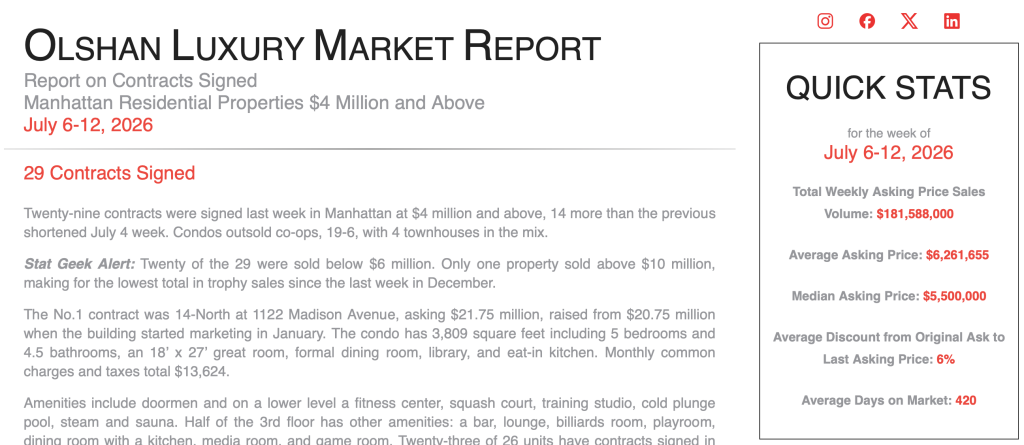
The picture shifted once the pied-à-terre tax actually took effect on July 1. In the week that followed, only one property above $10 million went into contract, versus the usual three to five.
Brokers described the pied-à-terre tax as shocking as wealthy buyers were newly hesitant about New York’s political climate as much as its tax bill.
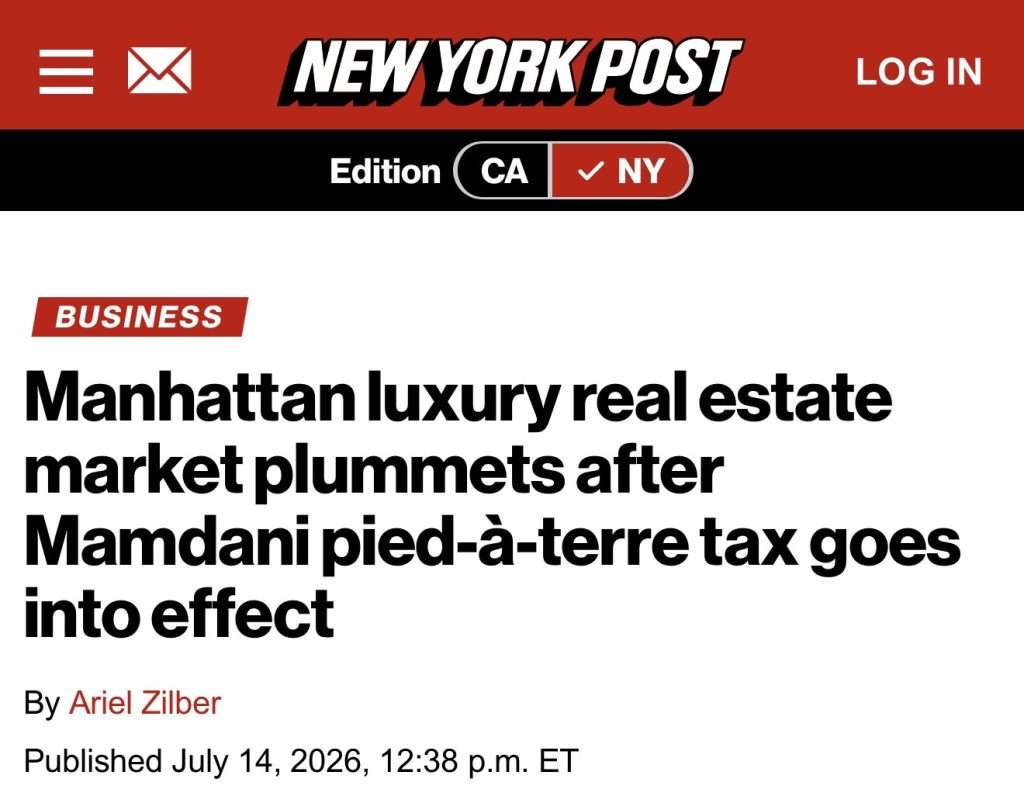
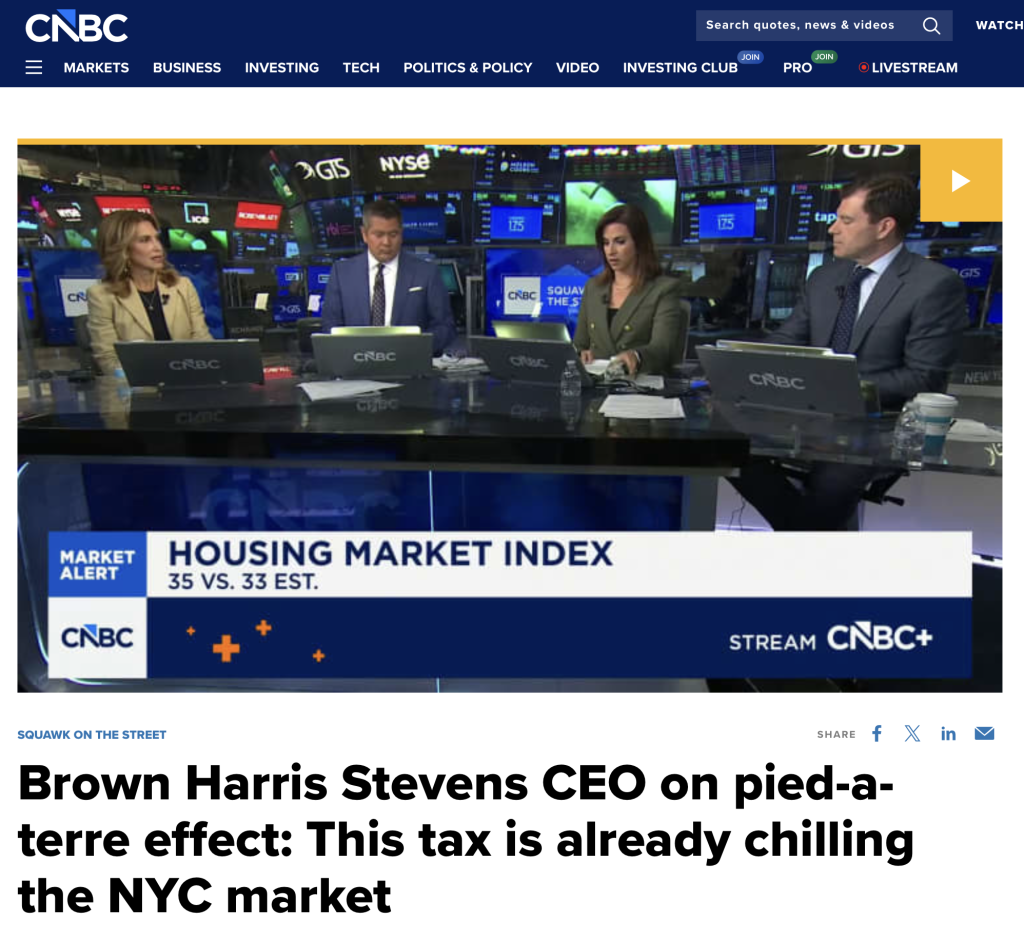
News outlets were also fast to declare that the Manhattan luxury real estate market was plummeting (Source: New York Post) and that the pied-à-terre tax was “chilling the NYC market.” (Source: CNBC).
However, we should never read too much into a single slow week. Notably, the broader $4 million-plus market stayed active with 29 deals, suggesting money wasn’t leaving the city so much as shifting down-market, away from the very top tier the tax targets most aggressively.
By early August, brokers surveyed for CNBC’s Inside Wealth were describing the fears as “quickly subsiding,” with sales holding firm and inventory actually falling; that is quite the opposite of what a market in freefall would look like. (Source: CNBC)
What Does the Data Show Overall?
What the data actually shows is a market segmenting rather than collapsing. The ultra-luxury tier ($10 million and up, the properties facing the steepest effective tax burden) is the segment showing real hesitation.
The broader luxury market, roughly $4–10 million, has proven far more resilient, and may even be absorbing demand that’s being priced or scared out of the very top end. That’s a meaningfully different story than “the luxury market is crashing.”
What the pied-à-terre tax is actually doing is making the most expensive, least-utilized properties less attractive to non-resident owners, while leaving the broader high-end market largely intact.
There’s also a structural reason to expect noise before signal. Weekly contract data in a market that only sees a handful of $10 million-plus deals per week is inherently volatile, as a single canceled deal or a single buyer’s cold feet can look like a trend.
Economists tracking the market have explicitly cautioned that several months of data will be needed before anyone can say with confidence whether July’s slowdown was a real shift or a blip.
The Bigger Question Nobody’s Answered Yet
The tax applies retroactively to any qualifying property owned as of January 5, 2026, meaning even buyers who closed deals earlier this year are on the hook.
The city’s Department of Finance isn’t set to notify affected owners until the end of August 2026, and the assessment and appeals process for co-ops and condos (where market value and assessed value can diverge wildly) remains genuinely unsettled.
Therefore, much of the “will it kill the market” debate has been happening before either buyers or the city actually know, property by property, what many owners will owe.
That uncertainty, more than the tax rate itself, may be what’s rattling the ultra-luxury segment right now. Luxury buyers don’t like open questions about what a $20 million purchase will actually cost them annually.
Once assessments and enforcement details settle (likely over the next year) we’ll have a much clearer answer than any single week of contract data can offer.
For now: The Answer is No
The pied-à-terre tax isn’t crashing New York’s luxury market and it is not triggering a wealth flight to Florida. It may be reshaping it by squeezing the very top while the rest holds steady.
Whether that reshaping becomes a genuine crash is a question the fall and winter sales data will be able to answer.